AI payment agents promise B2B gains but raise accountability concerns
Visa, SMBC and Temasek flag the need for stronger transaction controls.
Artificial intelligence (AI) agents are opening up new opportunities in business payments and corporate treasury, but questions over transaction authority, cybersecurity, and accountability could complicate wider adoption, executives said.
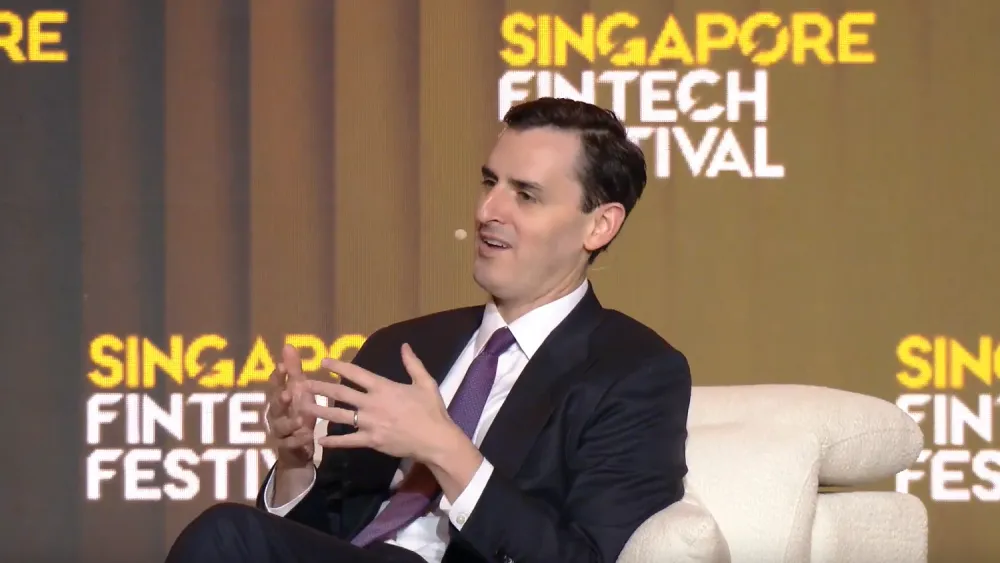
Speaking at a panel discussion during the Singapore FinTech Festival on 19 November, Stephen Karpin, president for Asia Pacific at Visa, said AI-driven payments are beginning to gain commercial traction, particularly in business-to-business (B2B) transactions.
He said rules-based B2B payments and money transfers are amongst the earliest applications being automated, whilst machine-to-machine transactions and smaller payments could create further opportunities.
However, Karpin noted that wider adoption would require systems that can verify AI agents, restrict their transaction permissions, and determine responsibility when payments go wrong.
“When something goes wrong, we need to be able to confirm exactly what the instructions were,” he added.
For instance, Karpin said Visa has developed its Intelligent Commerce credential for agentic payments, using tokenised payment credentials and passkeys to authenticate users and limit what AI agents can purchase.
“Once an agent receives it, there are specific parameters covering the user's intent, limitations and controls,” he added.
Karpin said restrictions could include maximum transaction amounts and merchant types, whilst transaction records could help determine whether errors originated with buyers, sellers or AI agents.
Akio Isowa, senior managing executive officer and group chief digital innovation officer at SMBC, identified corporate treasury and cross-border payments as potential applications for the technology.
Isowa said programmable deposits could allow businesses to transfer funds based on predefined conditions, manage liquidity more dynamically and reduce delays in cross-border settlements.
“When combined with AI, these capabilities could eventually help companies anticipate liquidity needs and execute appropriate financial actions more efficiently,” he added.
Isowa also identified opportunities in delivery-versus-payment settlement, which links asset transfers with corresponding payments to reduce settlement risks and improve capital efficiency.
However, customers must be able to specify what an AI agent can do, how much money it can transfer and under what conditions. “Banks would also need strong authentication, transaction monitoring, and mechanisms to stop or escalate activity when something falls outside those permissions.”
“The important distinction is between allowing AI to make recommendations and giving it authority to move money,” Isowa added.
Meanwhile, Pradyumna Agrawal, managing director for investment at Temasek, said autonomous financial transactions could create new business models, building on existing digital infrastructure and automation.
However, he warned that the technology could introduce risks that existing financial regulations may not fully address.
“Authentication is not the problem here. It's a question of authorisation. It's a question of completely new legal frameworks on who is actually accountable for these things,” Agrawal said.
He also warned that large numbers of AI agents operating simultaneously could exploit longstanding cybersecurity vulnerabilities at a greater scale.
Beyond the risks, Agrawal said banks could explore new revenue streams by offering services beyond traditional banking products, including storing data credentials and distributing financial products from other companies.


















 Read Here
 Advertise
 Sign Up