
Corporates seek simpler access as payment rails multiply
Bank of America Business says treasury teams want simpler access across payment networks.
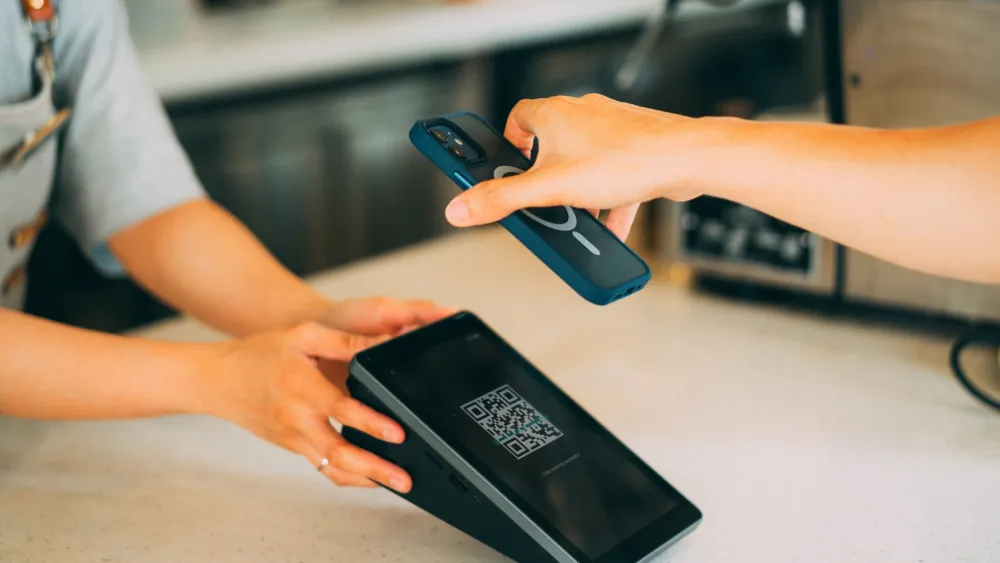
Corporate treasurers are gaining access to more real-time and alternative payment methods, but the growing number of rails is creating a new integration challenge.
Speaking at the Singapore FinTech Festival (SFF 2026) at Singapore EXPO, Olivier Anceau, Managing Director and Asia-Pacific Head for Specialised Products Sales at Bank of America Business, said real-time payment systems, alternative methods, and stablecoins are increasingly operating alongside one another.
“They want access to the choice, but they don't necessarily want to manage the complexity that comes with these multi rails,” Anceau said.
Banks are therefore taking on more of the integration role, simplifying access across different payment methods and networks.
Bank of America Business is also participating in Project Nexus, which aims to link domestic real-time payment systems across markets.
The same fragmentation is shaping liquidity management. Anceau said most clients now have real-time visibility over where cash sits, shifting attention towards how quickly that liquidity can be mobilised and deployed. That remains difficult because regulations, currencies and local rules differ across Asia, increasing demand for advice and cross-border liquidity tools.
Bank of America Business is looking to support that through services including real-time, 24/7 cross-border sweeps.
Working-capital priorities are also shifting. Anceau said treasury teams are using supply-chain finance and other trade tools to strengthen liquidity after recent disruptions.
AI is supporting payment operations through higher straight-through-processing rates, fraud detection and automated reconciliation. Anceau said some receivables applications already achieve automated matching rates of 90% or more.
The next step is agentic AI, which could move from generating recommendations to taking actions within treasury workflows.





















 Read Here
 Advertise
 Sign Up








Commentary
Singapore’s energy market needs more than accurate AI forecasts
The next frontier for insurance trust is beyond the login
Can governance keep pace with smarter technology?
Singapore’s nursing hours we cannot afford to lose
How Singapore businesses can turn automation into shared value
Rethinking authority: A systems thinking perspective on Singaporean workplaces
What matters for Singapore’s AI future is consistency, not brilliance
The AI pilot worked. Now comes the real test