Unclear accountability holds back fintech adoption
Firms remain answerable for actions taken on their behalf, DPM said.
Singapore’s financial sector has the technology to deploy AI agents, scale stablecoins and build seamless payment networks, but the rules governing who is accountable, what is permitted and who bears the cost have yet to catch up.
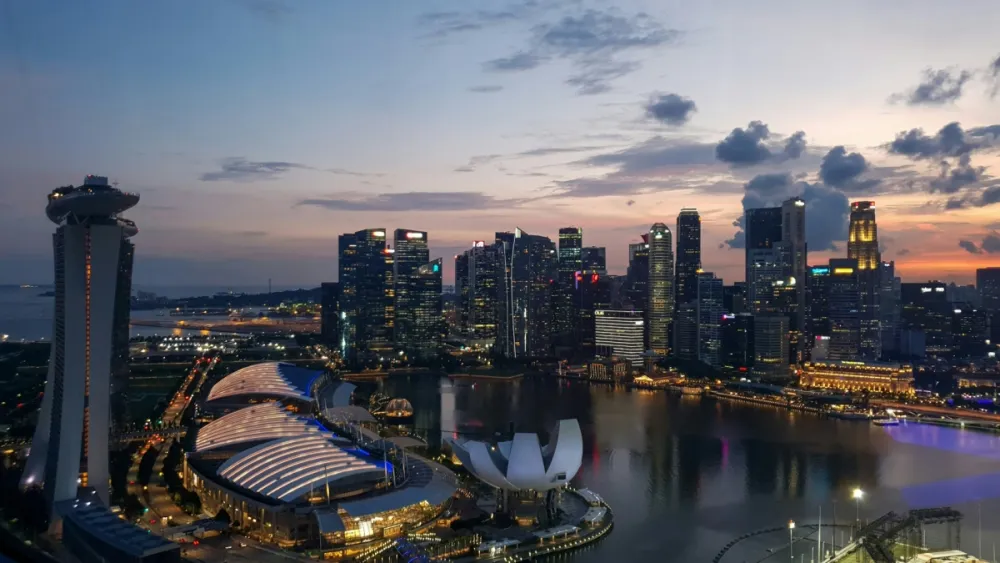
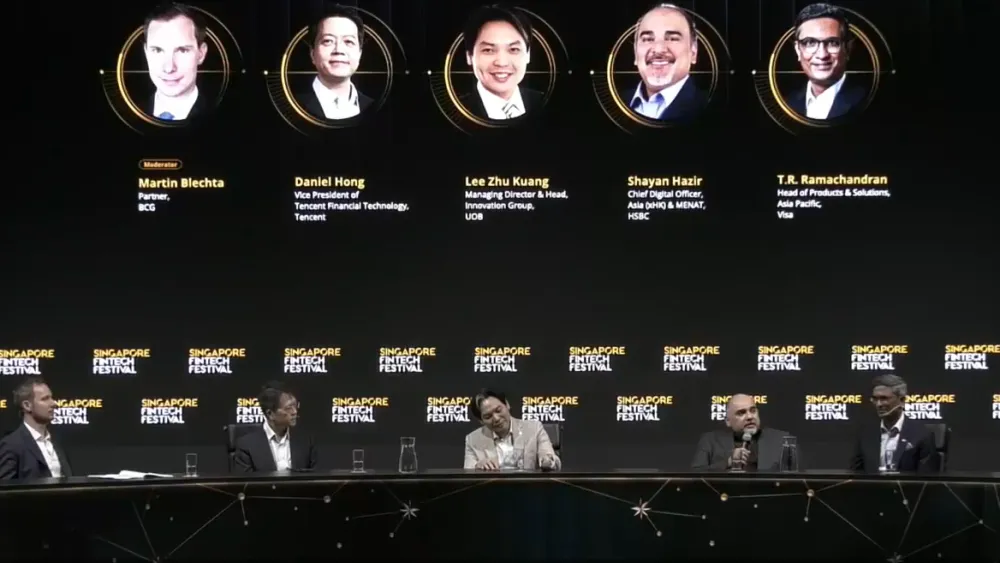
At the Singapore FinTech Festival 2026, Deputy Prime Minister Gan Kim Yong emphasised trust as central to Singapore’s ability to move quickly on AI and payments.
“Trust is central to how quickly we can innovate,” he said. “Clear standards and effective safeguards allow institutions to test and deploy new solutions responsibly.”
Gan said "agents must operate within defined authority and limits,” with institutions and enterprises remaining accountable for actions taken on their behalf. The scale of the gap is visible in the data.
Sasha Mills, executive director of financial market infrastructure at the Bank of England, cited a Bank of England and Financial Conduct Authority survey showing 80% of firms use AI agents and 90% expect to, but only 2% have deployed them with broad autonomy. None have done so in core financial actions.
“What we shouldn’t do is confuse or conflate this capability with permission,” Mills said.
She outlined the guardrails required: narrow and revocable permissions, human approval on key decisions, auditable logs, and the ability to pause systems. Governance, she said, must develop at the same speed as agent autonomy.
For stablecoins, the gap is rules designed for older instruments. Stephanie Cabossioras, chief strategy and global policy officer at Societe Generale-FORGE, said the firm has issued regulated stablecoins for two years yet “every time we want to develop a use case, there’s always a legal blocker somewhere.” They are not treated as cash equivalents under IFRS, investment funds buying tokenised shares with stablecoins must off-ramp to fiat intraday, and they do not count as high-quality liquid assets for prudential purposes.
Alexandra Hachmeister, director general of the digital euro at the Deutsche Bundesbank, said the challenge extends to cross-border arrangements.
“Technology is evolving, and I would trust that any challenges that we are facing from the technology side will be solved,” she said. The harder questions are who is in the system, who has access and how rules align across jurisdictions.
For QR payments, the gap is economics. Alan Ni, CEO of TNG Digital, recalled that Malaysia’s central bank directed his company, then the country’s largest SME merchant acquirer, to open its two million merchants to every issuer, wallet and bank for free. QR payments grew at around 60% annually and in 2025 overtook both credit and debit cards in Malaysia by value and volume.
Ni warned that if regulators stop at frameworks or push commercial margins to unsustainable levels, they will miss the participation from the private sector.
Lawrence Chan, group CEO of NETS Singapore, who contributed to the PayNow Generation 2 report on the interoperable switch, said sustainable economics and consistent user experience are the two conditions for interoperability to succeed.
Carrie Suen, vice-president and head of global affairs and strategic development at Ant International, said scale requires common technical standards, clear accountability and incentives that reflect the value created and the risk carried.
Singapore’s response addresses both as Gan announced three national AI missions for financial services: financial crime prevention, SME financing, and safe, agentic transactions. A proof of value is underway with five banks pooling transaction data to identify scam patterns, and MAS will begin a design study early next year for an industry-wide detection utility.
On payments, the PayNow Generation 2 Phase Two report sets out an SGQR Plus switch enabling residents and tourists to pay at any SGQR Plus label with their preferred QR app.





















 Read Here
 Advertise
 Sign Up